


Everyone has heard it.
“We just need a quick logo.”
“It’s only a brochure.”
“Can you have some concepts by tomorrow?”
“Shouldn’t AI make this faster?”
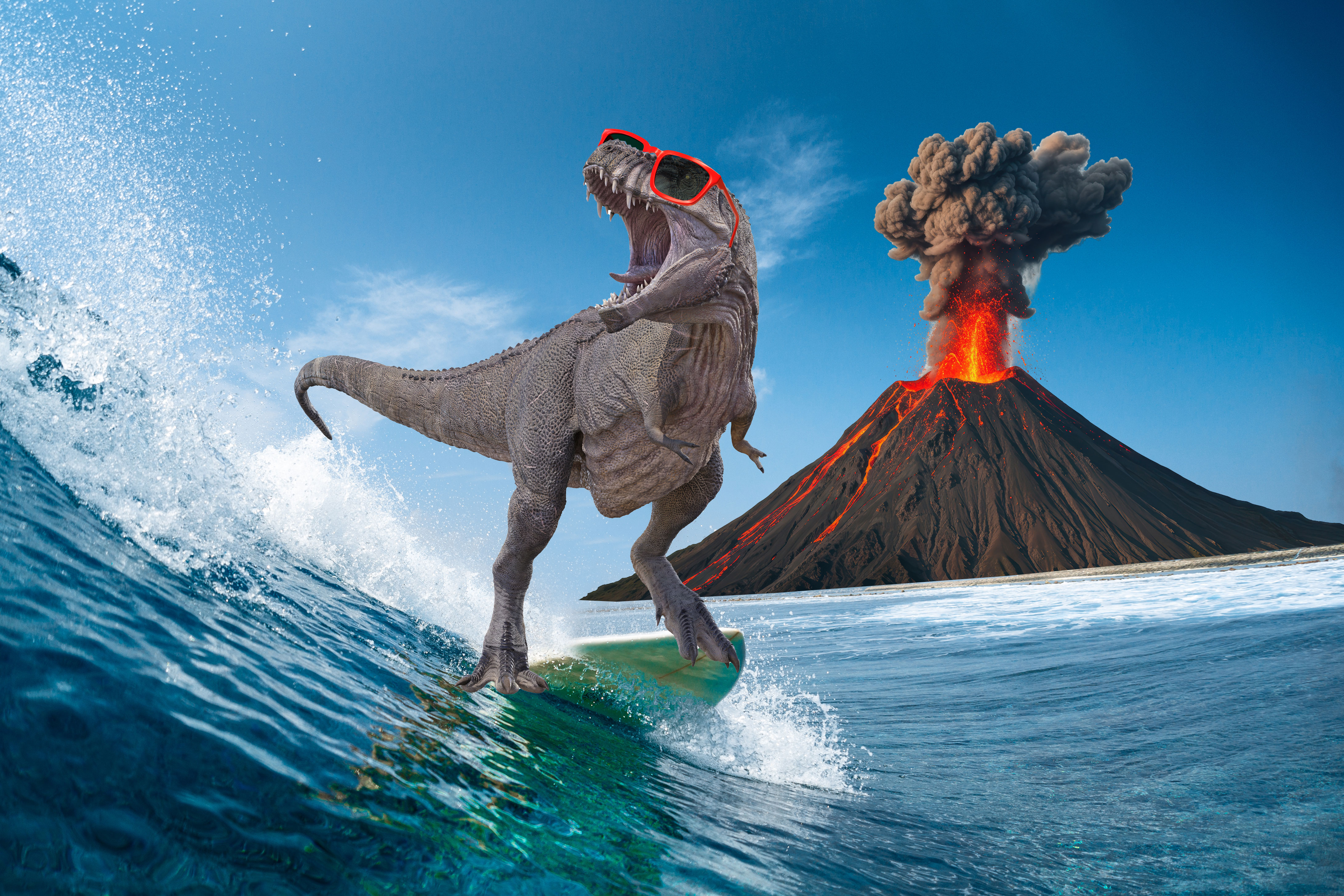
I get it. Technology has made a lot of things faster. Need directions? Mere seconds. Need a spreadsheet formula? Find it instantly. Need a photo of a surfing dinosaur wearing sunglasses? Surprisingly easy.
So, it’s understandable that people assume creative work should happen at the same speed. But that’s just it—creating something isn’t the same as creating something that works.
And that’s where our timeline myth begins.
The Iceberg Problem
Most people only see the finished product: The logo. The website. The video. The ad campaign.
What they don’t see is everything lurking beneath the surface. Think of creative work like an iceberg. The visible part is the final deliverable. The much larger portion hiding below is where the real work happens:
• Research
• Discovery sessions
• Audience insights
• Competitive analysis
• Messaging development
• Strategy
• Brainstorming
• Concept exploration
• Revisions
• Refinement
• More coffee and snacks
Especially the coffee.
By the time a client sees the first concept, dozens of decisions have already been made. The creative didn’t appear out of thin air—it emerged from a process designed to solve a specific business challenge.
Because despite what some people think, design isn’t decoration. It’s problem-solving with better fonts and colors.
Why the First Idea Usually Isn’t the Best Idea
Let’s say someone asks you to name the first headline that comes to mind for a new campaign. You probably could. Now come up with 10 more.
The first one was easy. The next nine take work. And somewhere around idea number seven or eight, something interesting tends to happen. You stop reaching for the obvious and start finding something more original.
That’s the creative process in a nutshell.
Great ideas rarely arrive wearing a spotlight and carrying a sign that says, “#winning.”
More often, they’re discovered after exploring several good ideas, a few bad ideas, and one truly terrible idea everyone agrees should never see daylight.
The first idea gets you started. The best idea comes from pushing beyond it.
The Client Wants a Website. What They Actually Need Is Clarity.
One of the biggest misconceptions in marketing is that clients hire agencies to create deliverables. In reality, they hire agencies to solve problems. A website might be the solution. Or it might not.
Before we design anything, we need to answer some important questions:
• Who?
• How?
• Why?
Without those answers, we’re just decorating. And while decorating is fun, it rarely improves conversions.
The “Can We Speed It Up?” Conversation
Of course, timelines matter. Businesses have launches. Organizations have deadlines. Events happen. Budgets exist.
We’re not suggesting every project needs six months and a retreat in the mountains. But there is a difference between moving efficiently and rushing.
When projects get compressed too aggressively, something usually must give:
• Research gets skipped.
• Strategy gets rushed.
• Stakeholder alignment disappears.
• Feedback becomes reactive.
• Revisions multiply.
Ironically, trying to save a week at the beginning often adds three weeks at the end. It’s a little like skipping the recipe because you’re in a hurry and then wondering why dinner doesn’t taste great.
What Actually Takes so Long?
A typical creative project can look something like this:
Week 1–2: Discovery
We ask questions. Lots of questions. We meet stakeholders, review competitors, analyze audiences, gather insights, and figure out what success actually looks like.
Week 2–4: Strategy
We turn all those insights into a plan. This is where positioning, messaging, key differentiators, and audience priorities take shape. It’s not flashy work, but it’s incredibly important work.
Week 4–6: Creative Exploration
Now the fun begins. Ideas get sketched. Concepts get built. Copy gets written. Designs take shape. Some ideas thrive. Others are escorted out of the building.
Week 7–10: Refinement
The strongest concepts get polished. Messaging gets tighter. Design details get sharper. Everything starts working together as a cohesive experience.
Week 9+: Production and Launch
Files are finalized. Assets are prepared. Campaigns launch. Everyone celebrates. Then someone notices a typo after the launch and collectively pretends not to see it.
Creativity Needs a Little Breathing Room
Have you ever struggled to remember someone’s name, only to have it randomly pop into your head while you’re unloading groceries? Creative thinking works the same way.
Sometimes the breakthrough doesn’t happen when you’re staring at the screen. It happens after you’ve stepped away. Great ideas often need space to evolve.
That’s not procrastination. That’s part of the process. The brain has an annoying habit of doing some of its best work when you’re not actively trying to force it.
AI Is Fast. Thinking Is Still Human.
Let’s address the robot in the room. Yes, AI can generate headlines, images, logos, videos, and even blog posts in seconds.
But while AI can accelerate execution, it can’t replace judgment. It doesn’t know your audience. It doesn’t understand organizational politics. It doesn’t sit in stakeholder meetings. It doesn’t uncover the subtle insight that transforms a campaign from good to memorable.
The most valuable part of creative work isn’t producing something. It’s knowing what should be produced in the first place.
That’s a human job.
The Real Deliverable
At the end of the day, clients aren’t paying for a logo. They’re paying for the right solution—not simply the fastest one. A logo can be created in an hour. A meaningful brand takes longer. A website can be assembled in a weekend. A website that drives results requires strategy. An ad can be produced tomorrow. An ad that people remember takes thought.
That’s the difference.
One Last Thing
We love efficiency. We love momentum. I personally love hitting deadlines.
But I’ve learned something after years of building brands, launching campaigns, and solving marketing challenges: The projects that create the greatest impact aren’t the ones that move the fastest. They’re the ones that take the time to get it right.
Because good creative isn’t magic. It’s research, strategy, collaboration, experimentation, refinement, and expertise working together. And while technology can speed up the tools, it can’t rush the thinking.
Otherwise, every surfing dinosaur in sunglasses would be winning advertising awards. 🦖😎